
Ceremony format
A ceremony ashore in port
Step off in a port of call and marry on a beach, in a garden or at a private venue, then sail on the same evening.
The Cruise Bride coordinates the sailing, the cabins and the guest travel. The cruise line runs its own wedding program where one is offered.
Tell us about your celebration
A cruise wedding specialist replies personally, usually within one business day.
- Format
- Ashore, in a port of call
- Legal status
- Ceremonies ashore follow the marriage law of that country or territory
- Typical lead time
- 12–18 months with a group
- Planning fee
- None
This is the ceremony people remember: a beach in the Bahamas, a garden above a harbour in Saint Thomas, a courtyard in Cozumel. You are ashore for a few hours, the light is extraordinary, and the photographs look nothing like a ballroom.
The planning question is not whether the venue is beautiful. It is whether the ship's time in port leaves enough room. A port call from eight in the morning until five in the evening sounds generous until you account for tendering, transfers, the ceremony itself and the walk back. We build the timeline against the ship's actual published hours and leave a real buffer.
The rule we never bend: everyone is back aboard well before all-aboard time. A ship will leave without you and without your guests, and the cost of catching up with it in the next port is not something you want on your wedding day.
On the legal side: Ceremonies ashore follow the marriage law of that country or territory. Some — the Bahamas and much of the Caribbean — are famously workable in a single day. Others require residency periods that rule them out.
The version most couples land on is a quiet signing at home and a full ceremony on the water.
Legal position
What makes this ceremony legal, or not
Ceremonies ashore follow the marriage law of that country or territory. Some — the Bahamas and much of the Caribbean — are famously workable in a single day. Others require residency periods that rule them out.
The practical question is never 'is a cruise wedding legal' — it is 'where is this particular ceremony physically happening, and who has authority there'. Answer that and the paperwork follows in a straight line.
The version most couples land on is a quiet signing at home and a full ceremony on the trip. It costs less, removes every jurisdictional risk, and no photograph shows the difference.
The reception
What happens after the vows
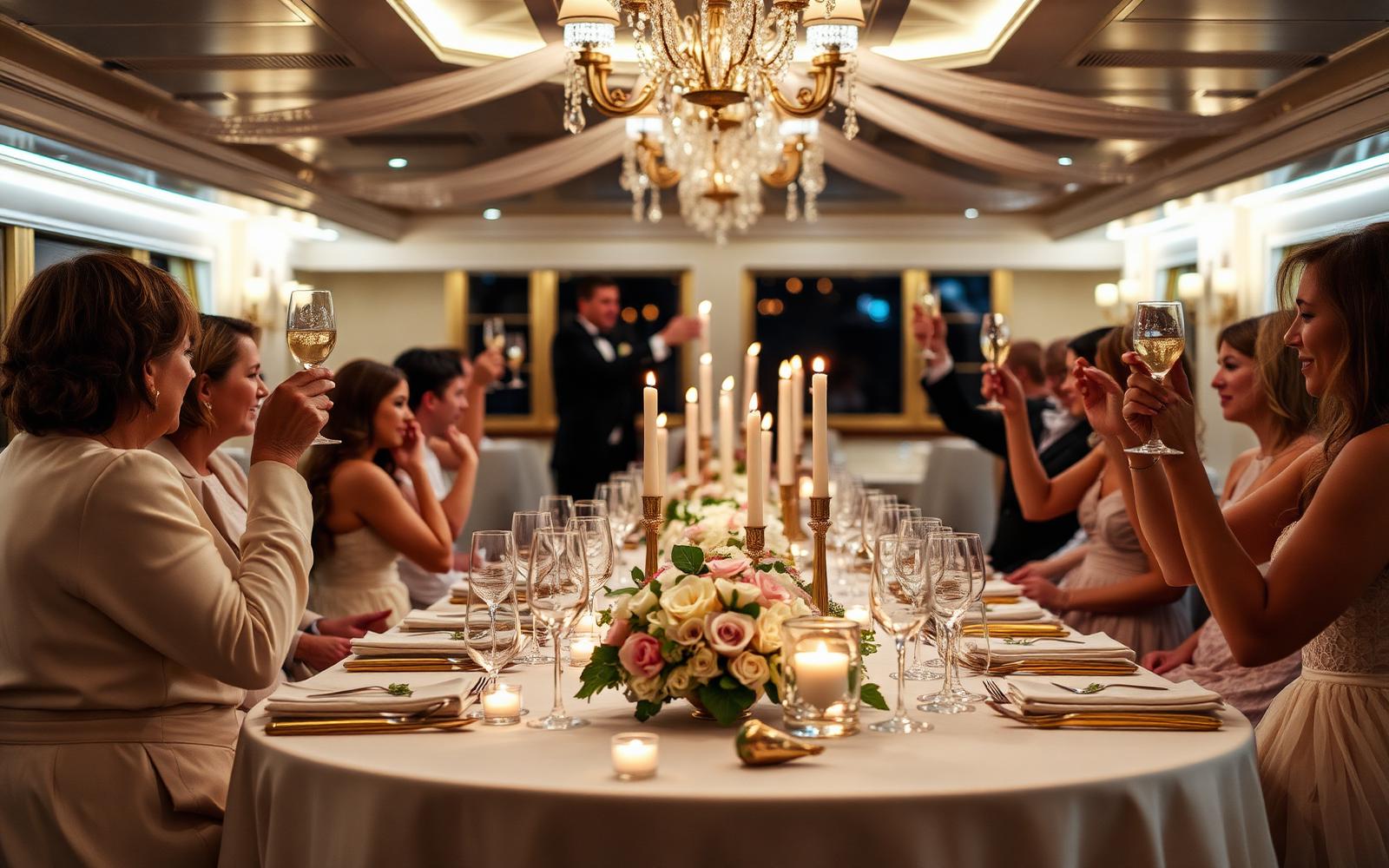
Cruise-line packages usually cover the ceremony and a short toast. The dinner, the dancing and the late bar are yours to shape, and they are where the day becomes a wedding rather than a photograph.
We put any group amenity credit toward the parts guests actually notice — the drinks at the reception, or the gratuities on the wedding-night dinner.
Planning timeline
A realistic timeline for a ceremony ashore in port
Eighteen to twelve months out, the only decisions that matter are the ceremony type and the sailing. Everything else — florals, attire, the reception menu — is downstream of those two, and locking them early is what keeps the rest calm.
Twelve to eight months out we open the group block and take the first deposits. This is the step couples skip and later regret: once a popular sailing crosses about eighty per cent sold, keeping twenty guests on the same deck stops being possible at any price.
Eight to four months out, the cruise line's wedding department confirms the ceremony slot, the venue on the ship and the package inclusions. In parallel we chase every guest for a passport that is valid at least six months past the return date.
Inside ninety days, final payment falls due, the guest list stops changing, and we publish the single page that tells each guest their flight window, hotel night, boarding time and what to wear. From that point your job is the dress and the vows.
The numbers couples ask for first
- $0.0k–$0k
- Typical cruise-line ceremony package, before the reception
- $000–$000
- Per guest, per night, inside cabin at double occupancy
- 00–00 mo
- Lead time we ask for when a group is coming with you
- $0
- What our planning costs you — the cruise lines pay us
What your guests spend
The number that decides who comes to a ceremony ashore in port
Attendance is set by the total a guest has to find, not by the fare you quote them. A seven-night inside cabin at $899 per person becomes closer to $1,400 once port fees, gratuities, a pre-cruise hotel night and travel to the terminal are counted, and that is the figure a cousin with two children is actually weighing.
We give every guest that honest total in writing before they book, along with a deposit schedule that spreads it over months rather than asking for it in one payment. Couples who do this see materially higher attendance than couples who send a fare and hope.
Where the group block earns amenity credit, we normally put it toward the things guests notice: a drinks package for the reception, or covering the gratuities on the wedding-night dinner. It is worth more as hospitality than as a discount split forty ways.
Questions couples ask
Answers before you commit to anything
The Bahamas and several Caribbean jurisdictions are set up for visiting couples and can often be completed the same day with the right paperwork. Requirements change, so we confirm the current rules for your specific port before you commit.
It happens — weather, mechanical, medical diversions. It is the main risk of marrying ashore. Some couples hold a symbolic backup slot on the ship for exactly this reason, and we will tell you when that is worth doing.
Only the ones you want there. Everyone else stays aboard and joins the celebration when you return, which is often a relief for older guests and families with small children.
Keep reading
Where this ceremony works best
Destinations that suit this format on a normal itinerary.

Other ways to say we do
Most couples compare two or three before deciding.
- A wedding at seaMarry on the ship while it is sailing, with your guests already aboard and nowhere else to be.
- A dockside weddingMarry on the ship while it is still tied up, so friends and family who are not cruising can attend the ceremony.
- A symbolic ceremonySay the words that matter in front of the people who matter, and handle the legal signing quietly at home.
- A legally binding ceremonyMarry once, on the trip, with the paperwork valid at home — which means choosing the jurisdiction first.
- A cruise elopementTwo people, a photographer, and a ship that takes you somewhere beautiful the next morning.
- A vow renewalAn anniversary, a hard year survived, a promise worth saying out loud again — with no paperwork at all.
- The receptionPrivate venue, open dining room or a bar takeover — the reception is where cruise weddings quietly outperform hotels.