Celebration · Just the two of you, or up to 60 guests
Vow renewal at sea
The simplest ceremony a cruise line offers — no licence, no paperwork, and the whole family already on board.
The Cruise Bride coordinates the sailing, the cabins and the guest travel. The cruise line runs its own wedding program where one is offered.
Tell us about your celebration
A cruise wedding specialist replies personally, usually within one business day.
- Who it suits
- Married couples marking a milestone, from five years to fifty
- Typical group
- Just the two of you, or up to 60 guests
- Planning fee
- None — the lines pay us
- Lead time
- 9–12 months is comfortable
A vow renewal is the easiest ceremony in the cruise world. There is no marriage licence, no jurisdiction to argue about, no waiting period and no paperwork, because you are already married. What remains is the good part: a setting, a short ceremony, the people you want around you, and a dinner that the ship is already cooking.
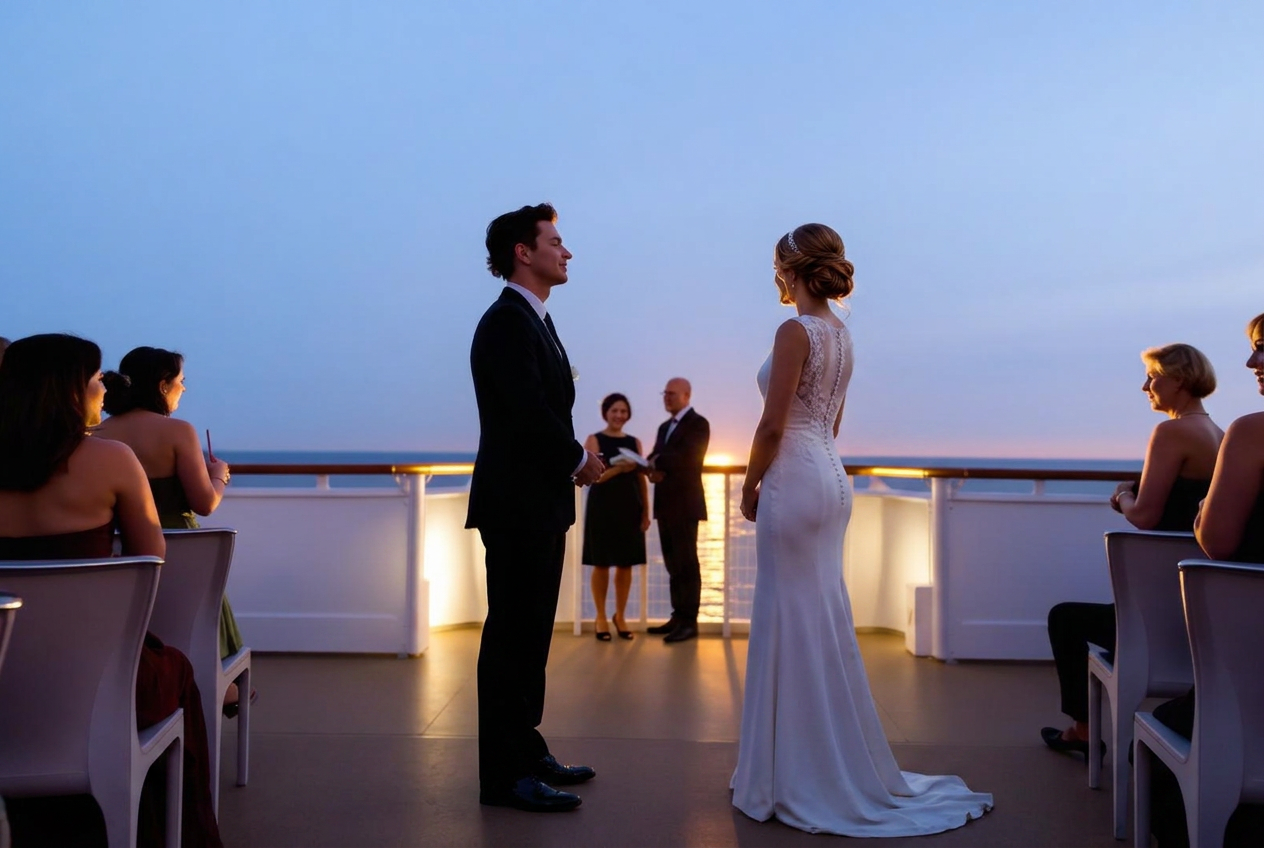
Most lines offer a vow renewal package led by a senior officer, usually in a lounge or on an open deck at a scenic moment in the itinerary. The ceremony runs ten to twenty minutes. Couples use it to mark a decade, to redo a wedding that was smaller than they wanted, or simply because a ship at golden hour is a better room than anything they could rent at home.
Because there is no legal dimension, the planning is really a group-travel problem. How many family cabins, which sailing suits school holidays, and whether you want a private reception afterwards or are happy letting the main dining room carry the evening. That is the work we do, and it is lighter than a wedding by a wide margin.
Planning timeline
A realistic timeline for vow renewal at sea
Eighteen to twelve months out, the only decisions that matter are the ceremony type and the sailing. Everything else — florals, attire, the reception menu — is downstream of those two, and locking them early is what keeps the rest calm.
Twelve to eight months out we open the group block and take the first deposits. This is the step couples skip and later regret: once a popular sailing crosses about eighty per cent sold, keeping twenty guests on the same deck stops being possible at any price.
Eight to four months out, the cruise line's wedding department confirms the ceremony slot, the venue on the ship and the package inclusions. In parallel we chase every guest for a passport that is valid at least six months past the return date.
Inside ninety days, final payment falls due, the guest list stops changing, and we publish the single page that tells each guest their flight window, hotel night, boarding time and what to wear. From that point your job is the dress and the vows.
The same machinery
Every group celebration runs like our weddings
A held block of cabins, linked dining, a private moment or two, and a specialist answering your guests' questions directly. The only thing a celebration drops is the licence paperwork.
Tell us the occasion, the rough headcount and the time of year, and we will come back with the sailings and ships that fit it.
What your guests spend
The number that decides who comes to vow renewal at sea
Attendance is set by the total a guest has to find, not by the fare you quote them. A seven-night inside cabin at $899 per person becomes closer to $1,400 once port fees, gratuities, a pre-cruise hotel night and travel to the terminal are counted, and that is the figure a cousin with two children is actually weighing.
We give every guest that honest total in writing before they book, along with a deposit schedule that spreads it over months rather than asking for it in one payment. Couples who do this see materially higher attendance than couples who send a fare and hope.
Where the group block earns amenity credit, we normally put it toward the things guests notice: a drinks package for the reception, or covering the gratuities on the wedding-night dinner. It is worth more as hospitality than as a discount split forty ways.
The numbers couples ask for first
- $0.0k–$0k
- Typical cruise-line ceremony package, before the reception
- $000–$000
- Per guest, per night, inside cabin at double occupancy
- 00–00 mo
- Lead time we ask for when a group is coming with you
- $0
- What our planning costs you — the cruise lines pay us
Questions couples ask
Answers before you commit to anything
No, and that is the advantage. There is no licence and no paperwork — it is a ceremony and a celebration, not a legal event.
Yes, and they often are the best part of it. Officers are used to families gathered around the couple, and there are no rules about who stands where.
Packages are typically a fraction of a wedding package because there is no legal coordination. Your guests pay their own fares, and the reception can be as simple as a reserved section of a dining venue.
Keep reading
Marrying as well?
The ceremony formats, if the celebration includes one.
Other celebrations
- Anniversary cruiseA dinner, a deck and a date — the anniversary trip that plans itself, with the option to bring the whole family.
- Honeymoon cruiseUnpack once, see four countries, and let the ship carry the logistics of the first trip you take as a married couple.
- Engagement and proposal cruiseA proposal with a built-in celebration — and the trick of keeping a dozen co-conspirators quiet on the same ship.
- Bachelorette and stag cruiseOne four-night sailing instead of three expensive weekends — the pre-wedding trip that everyone can actually afford.
- Milestone birthday cruiseThe round-number birthday that gets the whole family on one ship — with none of the hosting falling on one sibling.
- Family reunion cruiseThe reunion format where nobody hosts, nobody cooks, and the teenagers and the great-grandparents both have a good week.
- Elopement cruiseThe wedding stripped to its essentials: a licence, a ceremony, the sea — and the honeymoon starts the same hour.
- Second marriage cruiseSmaller, warmer and deliberately different from the first time — the format second-time couples choose most.
- Retirement celebration cruiseA retirement party that lasts a week, where the guest of honour gives one toast instead of hosting one hundred conversations.
- Multigenerational holiday cruiseThe family holiday where four generations each get the week they wanted — and still eat dinner together.